
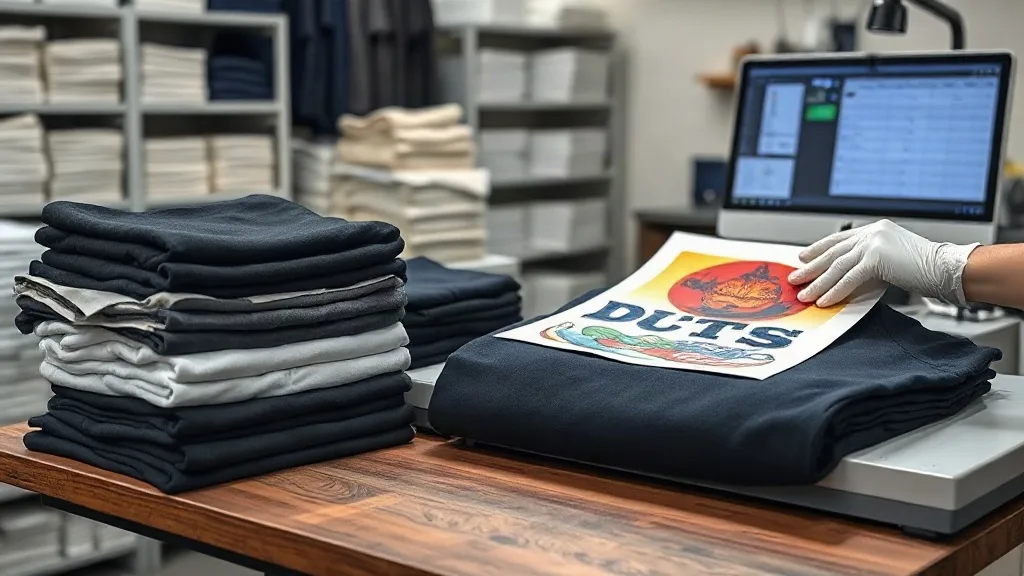
When you run a print shop, every blank you choose affects the final product, your profit margin, and your reputation. shaka wear has become a go-to brand for many shops thanks to its consistent quality and fabric options that cater to different printing methods. In this guide, we'll explore how Shaka Wear blanks perform with DTF printing, from fabric selection to pressing techniques, so you can make informed decisions and deliver outstanding results to your customers.
Why Shaka Wear Stands Out for DTF Printing
Shaka Wear is known for its heavyweight cotton tees and fleece, but what makes it particularly suitable for DTF? The answer lies in the fabric composition and construction. Most Shaka Wear styles are 100% cotton or cotton-rich blends, which provide an ideal surface for DTF transfers. The tight knit helps prevent the ink from sinking too deep, allowing for crisp, vibrant prints. Additionally, the brand's quality control ensures minimal shrinkage and consistent sizing, which is crucial when you're producing large orders.
Fabric Types and Their DTF Compatibility
Shaka Wear offers several fabric types, each with its own characteristics that impact DTF printing:
- 100% Cotton: The most common choice for DTF. Cotton holds the adhesive well and produces bright colors. However, pre-treatment may be needed for dark garments to improve adhesion.
- Cotton/Poly Blends: These blends can be more challenging because the polyester fibers may repel the adhesive if not pressed correctly. But with proper settings, they yield excellent results, especially for athletic wear.
- Tri-Blend: Shaka Wear's tri-blend (cotton/poly/rayon) offers a soft hand feel and vintage look. DTF on tri-blend requires lower pressing temperatures to avoid scorching the rayon.
Always test a small sample before committing to a full production run, as fabric variations can affect the final outcome.
Preparing Shaka Wear Garments for DTF
Proper preparation is key to a successful DTF transfer. Here's a step-by-step process:
- Pre-press the garment: This removes moisture and wrinkles. Set your heat press to 330°F (165°C) and press for 5-7 seconds with medium pressure.
- Lint removal: Use a lint roller to remove any fibers that could interfere with adhesion.
- Position the transfer: Place the DTF transfer with the printed side facing up. Ensure it's centered and aligned.
- Press: Cover with a Teflon sheet or parchment paper and press at 330°F for 15-20 seconds with medium-heavy pressure.
- Peel: Wait for the transfer to cool completely (cold peel) for best results. Peel smoothly from one corner.
- Post-press: For added durability, press again for 5-10 seconds with a Teflon sheet.
For more detailed instructions on heat press settings, refer to our DTF Gangsheet Builder guide, which covers a range of fabrics and settings.
Heat Press Settings for Shaka Wear Blanks
Shaka Wear's heavyweight cotton (e.g., the 7.5 oz tee) requires slightly higher pressure to ensure the adhesive penetrates the fabric. For blends, reduce the temperature to 310°F (155°C) to prevent scorching. Always check the garment's care label for specific recommendations.
Common DTF Issues on Shaka Wear and How to Fix Them
Even with careful preparation, you might encounter issues. Here are some common problems and solutions:
- Transfer peeling after washing: This usually indicates insufficient pressure or incomplete cooling before peeling. Increase pressure and ensure cold peel.
- Faded colors: May be caused by too high temperature or pressing for too long. Reduce temperature and time.
- Adhesive residue on the press: Use a Teflon sheet and clean your press regularly.
For more troubleshooting, consult our DTF Gangsheet Builder resource, which includes a detailed FAQ.
Maximizing Efficiency with Shaka Wear and DTF
To streamline your workflow, consider these tips:
- Batch similar fabrics: Group garments by fabric type to avoid constant temperature adjustments.
- Use a DTF Gangsheet Builder: This tool helps you arrange multiple designs on a single sheet, reducing waste and saving time.
- Maintain a log: Record settings for each Shaka Wear style to build a reference library.
Frequently Asked Questions
Can I use DTF on Shaka Wear's tri-blend shirts?
Yes, but you need to lower the pressing temperature to around 300°F (150°C) and use light pressure to avoid damaging the rayon. Cold peel is essential.
What is the best heat press setting for Shaka Wear 100% cotton tees?
For 100% cotton, set your press to 330°F (165°C) with medium-heavy pressure for 15-20 seconds. Cold peel for best adhesion.
How do I prevent the DTF transfer from cracking on Shaka Wear hoodies?
Ensure even pressure across the entire transfer. Pre-press the hoodie to remove wrinkles, and use a Teflon sheet. Also, avoid stretching the garment when peeling.
Does Shaka Wear offer styles suitable for DTF on performance fabrics?
Shaka Wear's performance fabrics (polyester blends) can be used with DTF, but require lower temperature (310°F) and light pressure to prevent dye migration. Always test first.
Where can I find bulk Shaka Wear blanks for my shop?
Check with authorized distributors or online wholesalers. Many offer volume discounts, and some provide pre-treated options for DTF.